Protected Trees in South Africa: When You Need a Licence Before Felling
A tree on your own property is not automatically yours to remove. Under section 15(1) of the National Forests Act (Act 84 of 1998) nobody is permitted to cut, disturb, damage or destroy a protected tree species — or possess, collect or transport its wood — without a licence from the Department of Forestry, Fisheries and the Environment. Doing it without one is a criminal offence, not a fine-and-forget administrative matter. The Minister publishes the list of protected species and updates it annually. Everything else on an ordinary suburban plot comes out without a municipal permit.
The three rules that actually apply
| What | Which law | What it requires of you |
|---|---|---|
| A protected tree species, anywhere — including inside your own garden | National Forests Act 84 of 1998, s.15(1) | A licence from DFFE before any cutting. Cutting without one is a criminal offence. |
| A listed invasive species — Port Jackson, rooikrans, black wattle and the rest | NEMBA and its invasive species regulations | The opposite duty: as landowner you are required to control it, not permitted to leave it. |
| A tree on a road verge, pavement or other City land | It is not your tree | The City manages it. Removal or pruning goes through the City, not through you. |
| An ordinary, unlisted tree inside your boundary | — | Generally no municipal permit. Species identification still decides it. |
How to tell whether yours is protected
What does the protected list actually cover?
It is a list of species, not of individual trees, and it is national. Every specimen of a listed species is protected wherever it stands. That is why identification comes before anything else — the question is never how big the tree is, it is what the tree is.
Which protected species turn up in Cape Town gardens?
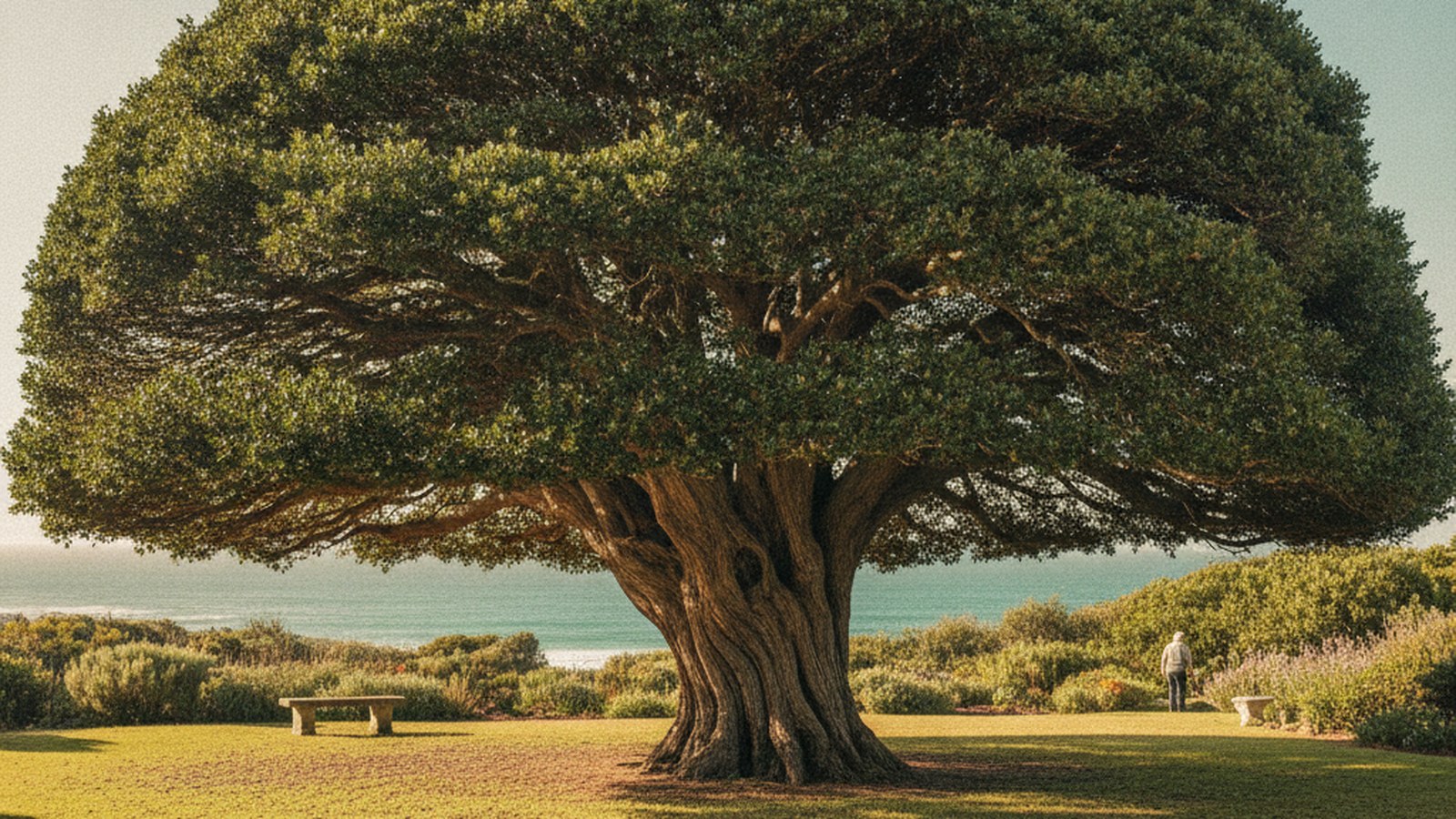
White milkwood (Sideroxylon inerme) is the one that catches Cape homeowners most often, particularly near the coast, and real yellowwood (Podocarpus latifolius) appears in older established gardens. Because the list is amended annually, the only safe answer for a specific tree is to identify the species and check it against the current published list.
What happens if it is protected?
You apply to DFFE for a licence, with the species, the location and the reason. A tree that is dead, diseased or genuinely dangerous is a different application from one that is simply inconvenient. The licence is a national process; it is not something a tree feller can waive or work around.
Does an arborist’s quote cover the licence?
No. A quote covers the work. Cape Town Tree Felling identifies the species at the free on-site assessment and says in writing whether a licence is needed before any price is agreed. A contractor who offers to remove a protected tree without one is proposing that you both commit an offence.
Heritage is a separate question
Protection under the National Forests Act is about species. Heritage protection is about place, and it runs through the National Heritage Resources Act and Heritage Western Cape, with some suburbs additionally covered by local heritage overlay zones. A tree can be entirely unprotected as a species and still sit inside a heritage overlay. If your property is in one, that is the second thing to check.