Blue Gum Trees: Identification, NEMBA Listing and Why Mature Gums Need Sectional Removal
Blue gums are eucalypts — Australian trees planted across the Cape from the 1800s for timber, fuel and windbreaks. Mature specimens exceed 30 m, and removing one near a building costs R6,000 to R18,000 because it has to be taken down in sections rather than felled in one piece. Eucalyptus listings under NEMBA vary by species and area: riparian populations are commonly Category 1b, while plantation stands sit in Category 2 under permit.
NEMBA listings are area-specific. The same species can sit in Category 1b in one part of the country and Category 2 in another, because Category 2 exists for plants grown under permit for a commercial purpose such as timber or tannin. Always read the listing for the area the tree is standing in.
How to recognise a eucalyptus
| Feature | Blue gum and related eucalypts |
|---|---|
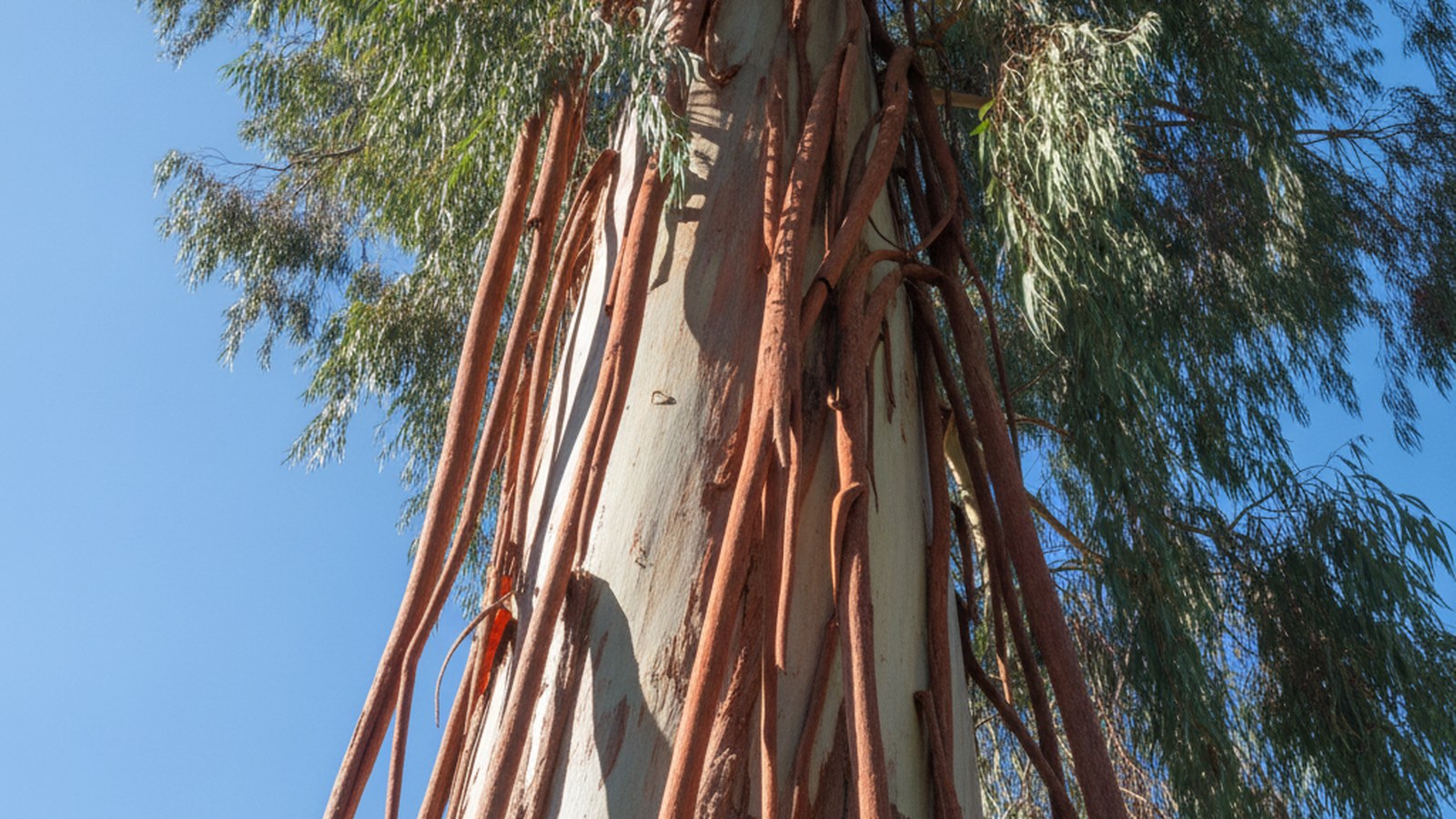
| Bark | Sheds in long ribbons or plates, leaving a smooth, patchy trunk beneath |
| Leaves | Long, narrow, leathery, hanging vertically; strongly aromatic when crushed |
| Juvenile leaves | Rounded, opposite and blue-grey — quite unlike the adult foliage on the same tree |
| Fruit | Woody capsules — the familiar hard ‘gum nuts’ |
| Height | Commonly 20–30 m, mature specimens beyond that |
| NEMBA | Varies by species and area; commonly 1b in riparian zones, 2 in plantations |
The safety case
Why do gums drop branches in still weather?
Eucalypts shed large limbs under their own weight, and they do it in calm, hot conditions as readily as in wind. The limb is heavy, it is high, and there is no warning. That behaviour is the single most common reason a mature gum near a house, a driveway or a boundary wall gets removed.
Why can’t a big gum just be felled in one piece?
A 30 m gum needs a 30 m clear fall zone in the right direction, and almost no suburban property has one. The tree is instead climbed and dismantled in sections, with each piece rigged and lowered on ropes. That is slower and needs more people, which is what puts a large gum at the top of the price range.
What do the roots do to drains and foundations?
Eucalyptus roots are aggressive water seekers and will exploit a cracked drain or a damp foundation line. They rarely break sound concrete on their own; they enlarge faults that already exist. Where a gum stands close to services, the stump is ground out rather than left to die back in place.
What removal costs
| Tree size | Method | Price range |
|---|---|---|
| Small, under 5 m | Directional felling | R1,500–R3,000 |
| Medium, 5–10 m | Directional or sectional | R3,000–R6,000 |
| Large, 10–20 m | Sectional, rigged | R6,000–R12,000 |
| Extra-large, 20 m and over | Sectional, crane optional | R12,000–R18,000 |